
PG&E and Entergy Mississippi have begun major grid infrastructure improvements to handle increasing energy demand.
California and Mississippi utilities are ramping up their grid investments to keep pace with explosive data center demand growth. Pacific Gas & Electric Company (PG&E) leads with $73 billion planned for infrastructure upgrades, while Entergy Mississippi has launched a $300 million reliability and modernization initiative.
Both efforts come as utilities across the U.S. are prioritizing large-scale infrastructure hardening, digitization, and capacity expansion to meet a new market of high-load energy users.

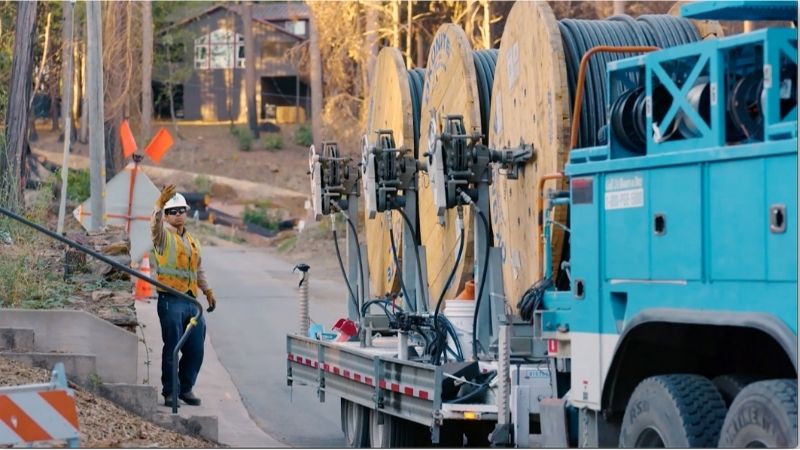
PG&E has unveiled a $70+ billion grid upgrade plan. Image used courtesy of PG&E
PG&E Plans $73B Grid Expansion
PG&E will commit $73 billion to a five-year plan for transmission upgrades to support rising loads from data centers, electric vehicle charging, and hydro and energy storage projects.
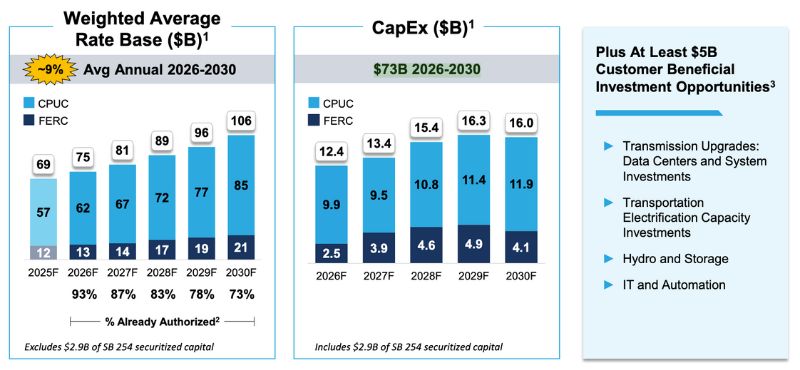
Plan for grid upgrades by year. Image used courtesy of PG&E Corporation
Executives stated PG&E’s recent transmission work has largely focused on “bread-and-butter” substation upgrades, maintenance, and other projects the California Independent System Operator (CAISO) approved. The five-year plan will continue that work, alongside beneficial load growth in the region. It also includes ongoing wildfire mitigation measures such as undergrounding. So far this year, PG&E has installed 209 miles of covered power lines and stronger poles.
Earlier this year, PG&E reported a massive surge in data center applications, with demand expected to reach 10 GW over the next 10 years—up from 8.7 GW estimated in May. Most of this activity is concentrated in the San Francisco Bay area and San Jose, with some in Sacramento and the Central Valley. Seventeen data center projects totaling 1.5 GW have reached the final engineering stage before construction and are expected to start operating between 2026 and 2030.
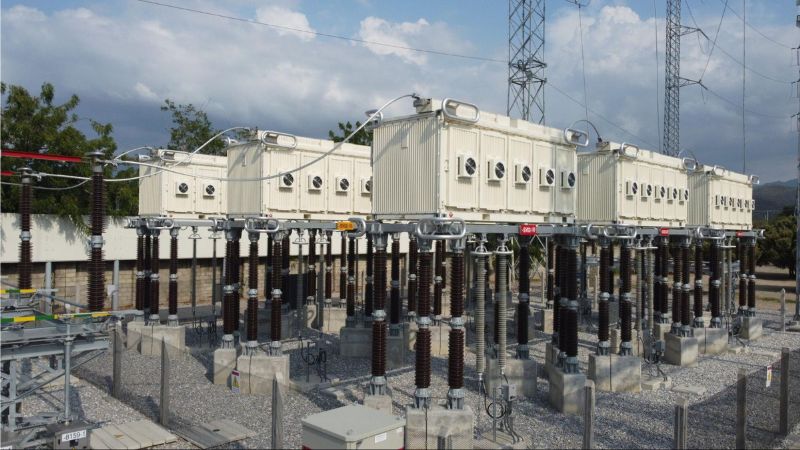
PG&E substation in San Jose. Image used courtesy of PG&E
PG&E has been experimenting with new technologies for years. In May, the utility deployed an advanced power flow control (APFC) system called SmartValve to redirect power flow, manage thermal loads, and boost capacity by more than 100 MW at a substation near data centers in San Jose. PG&E is also expanding its energy storage base, launching a “world-first” long-duration hybrid microgrid facility integrating hydrogen fuel cells and lithium-ion batteries.
AI data centers, EVs, and building electrification have pressed California’s transmission needs. CAISO’s 2024-2025 transmission plan projects 76 GW of new capacity will be needed statewide by 2039, requiring 31 new transmission projects totaling $4.8 billion. These include new 500 kV and 230 kV lines, reconductoring and upgrading the capacity of existing 115 kV lines and substations, among other smaller upgrades to boost load access in smaller resource zones.
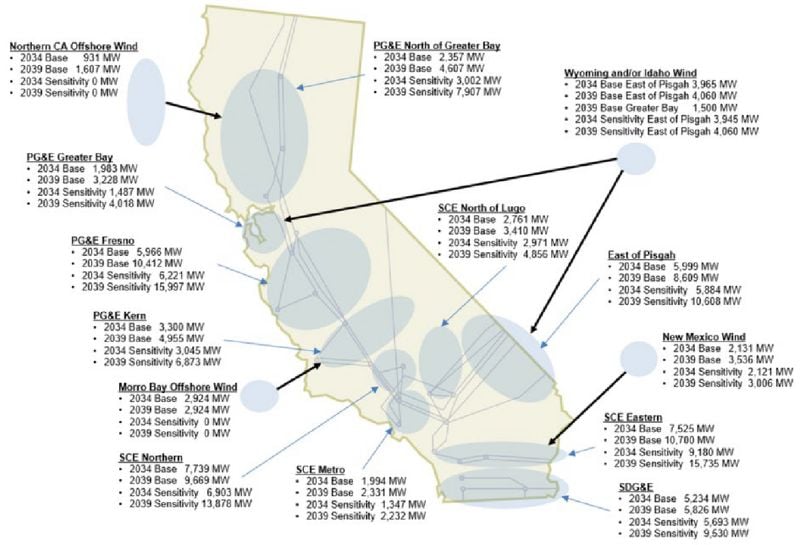
California transmission planning zones and capacity. Image used courtesy of CAISO
$300M “Superpower Mississippi” Investment
Entergy Mississippi will initiate a $300 million infrastructure program—the largest grid reliability effort in the utility’s history, aimed at both hardening and digitizing the grid. The five-year initiative, Superpower Mississippi, has requested approval from state authorities to increase Entergy’s grid improvement spending by 50%.
Superpower Mississippi is designed to reduce outage frequency and duration by half within five years (excluding weather events) and to prepare for a surge in industrial and data center load growth that’s already reshaping the region’s demand profile. Over the past year, Entergy Mississippi has seen an influx of large-load interconnection requests, much of it tied to hyperscale data center projects such as Amazon Web Services’ planned $16 billion regional footprint.
The program will fund stronger poles, real-time monitoring and smart devices, tree-trimming, and dead tree removal. It’s also eyeing self-healing networks that pinpoint faults, redirect power, and restore service faster. One of the immediate reliability drivers is vegetation stress following a 2023 drought, which killed millions of trees across the state. Since then, Entergy Mississippi reports that fallen tree-related outages have nearly doubled between January and August 2025 compared with the pre-drought three-year average.
Entergy Mississippi already has $600 million in grid investments mapped out, bringing the total to nearly $1 billion. The company emphasized that no rate increase is planned for customers, as new revenues from large industrial and data center customers are expected to underwrite the investment.
